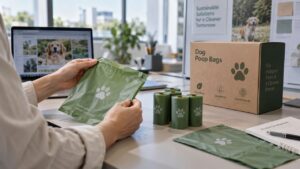
For pet brands looking to reduce their reliance on virgin plastic, recycled dog poop bags offer a practical material route.
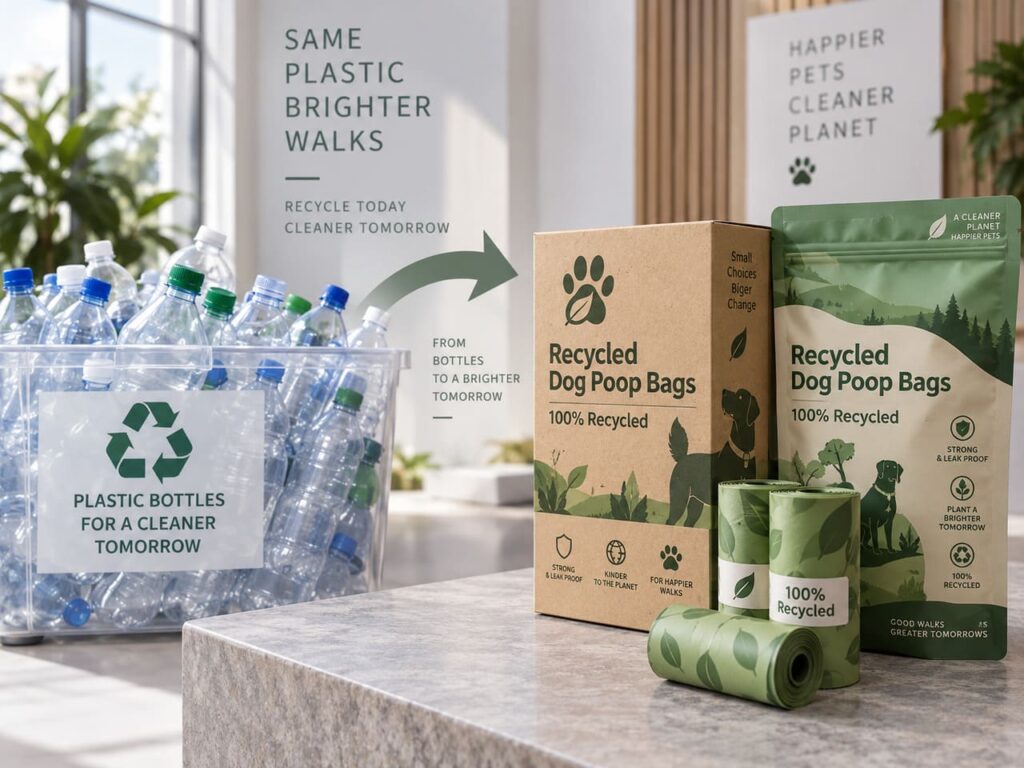
The idea is straightforward: plastic that already exists can be collected, reprocessed and used again instead of relying entirely on newly produced plastic for every new product.
Our 100% Recycled dog poop bags follow this principle — giving existing plastic another useful life while keeping the product within a familiar PE-based bag format.
For buyers comparing different sustainable material options, our guide to eco-friendly dog poop bags for wholesale and private label provides a broader overview.
Recycled Plastic vs Virgin Plastic
The most important difference is the material source.
Virgin plastic is produced from newly processed raw materials, traditionally derived from fossil resources.
Recycled plastic starts with plastic that already exists. After recovery and reprocessing, that material can enter another useful product cycle.
From a sustainability perspective, the value is easy to understand: using recycled plastic helps reduce dependence on newly produced virgin material and keeps existing plastic in use for longer.
The point is simpler: existing material still has value, and it can be used again.
For private label pet brands, this creates a clear sustainability story without requiring a completely different product system.
More product-level information is available on our 100% Recycled dog poop bags page.
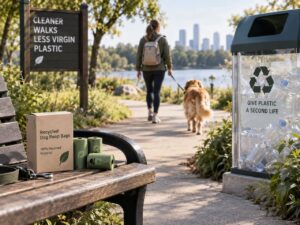
What Should Buyers Expect From Recycled Dog Poop Bags?
Sustainability is only one part of the purchasing decision.
A recycled dog poop bag still needs to perform reliably in everyday use. Buyers should therefore evaluate the finished product rather than judge it only by the material claim.
Recycled PE may show some natural variation compared with virgin PE, particularly in areas such as color or surface appearance. The exact result depends on the material, formulation and converting process.
For a private label project, the important question is whether the finished bag meets the agreed specification.
Typical checks include:
- bag strength and sealing
- thickness and dimensions
- ease of opening
- roll consistency
- color and printing quality
- retail packaging
- carton configuration
A recycled-material choice should support the sustainability objective without losing sight of product quality.
Why Sampling Still Matters
Material descriptions can tell a buyer what a bag is made from, but they cannot replace an actual product sample.
Thickness, sealing, feel, opening performance and printing result are easier to judge on the finished bag than on a technical specification alone.
This is especially relevant for private label projects, where buyers may also need to confirm roll count, packaging format, artwork position and overall presentation before production.
A good sourcing process therefore connects the material choice with the finished-product requirement.
The question is not simply:
“Is this recycled?”
It is:
“Does this recycled bag work for our product and market?”
What Buyers Should Know About GRS Documentation
GRS can be relevant when recycled-material documentation forms part of the project requirements.
Where required, recycled raw material sourced from a GRS-certified upstream supplier can be available, subject to the project and available supplier documentation.
This is different from claiming that the finished Xinrui dog poop bag itself is GRS Certified.
The distinction matters because upstream raw-material certification and finished-product certification are not the same thing.
For private label buyers, the practical approach is to confirm the documentation needed for the project before finalizing packaging or marketing claims.
There is no need to make the certification story more complicated than the actual supply chain supports.
Why Recycled Dog Poop Bags Work Well for Private Label Projects
Recycled plastic can be particularly suitable for brands that want a clear sustainability direction while staying within a familiar PE-based dog poop bag structure.
Many standard private label requirements remain straightforward to develop, including bag dimensions, thickness, roll format, color, printing and retail packaging.
This makes recycled dog poop bags a practical option for brands that want the material itself to carry part of the sustainability message.
The commercial side still matters. The material choice has to work with the product specification, target price, packaging concept and intended market.
A sustainable material only makes sense when the finished product also makes sense.
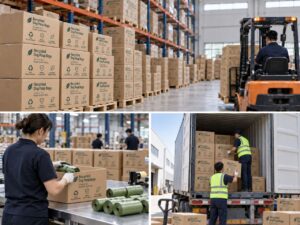
When Should Buyers Consider Other Materials?
Recycled plastic is one route, not the answer to every project.
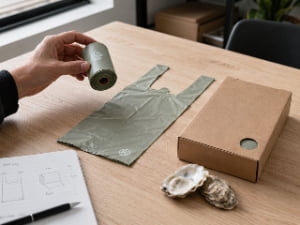
Brands looking for stronger material differentiation may consider Oyster Shell + Recycled dog poop bags, which combine recycled plastic with processed shell powder from aquaculture by-products.
If certified compostability is central to the product brief, our Compostable vs Biodegradable Dog Poop Bags guide explains the different material and end-of-life considerations.
For brands focused on renewable plant-based feedstock and lower-carbon positioning, our Bio-PE dog poop bags guide explains another option.
The right choice depends on what the brand wants the product to achieve.
Choosing Recycled for the Right Reason
The value of recycled plastic is not complicated.
It gives existing plastic another useful application and helps reduce reliance on newly produced virgin material.
For private label buyers, the material decision should then be tested against the realities of the project: product performance, specification, packaging, documentation and cost.
When those elements work together, 100% Recycled dog poop bags can provide a practical and easy-to-understand sustainability direction for a private label product range.
Planning a Recycled Dog Poop Bag Project?
Share your target market, bag specification, packaging format and private label requirements. We can help you review the material options and work through the sourcing details before sampling.