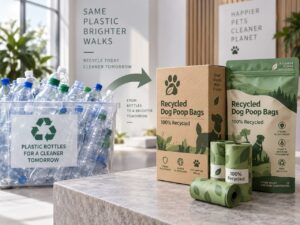
For B2B buyers evaluating Oyster Shell + Recycled dog poop bags, the material story is only one part of the sourcing decision. Finished-bag performance, product specifications, supporting documentation and packaging claims all need to be checked together.
This guide explains the key points to review before approving an Oyster Shell + Recycled dog poop bag project. For product specifications and private label options, see our Oyster Shell + Recycled Dog Poop Bags page.
What Are Oyster Shell Dog Poop Bags Made From?
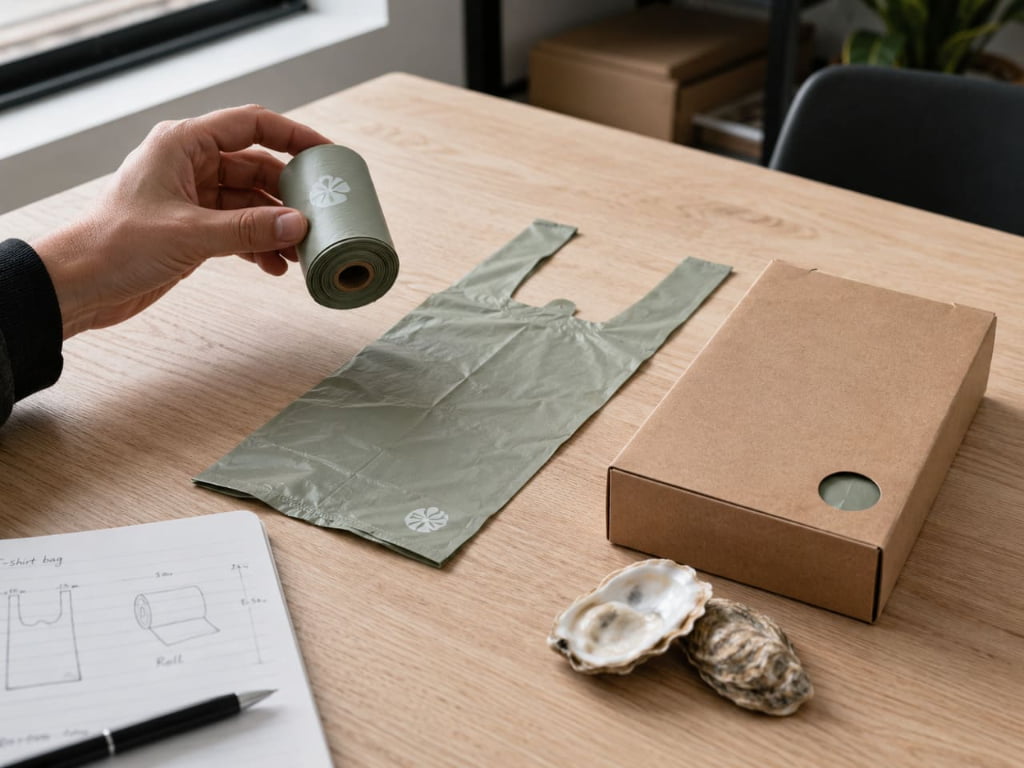
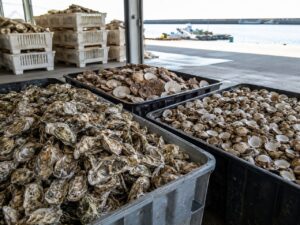
Oyster Shell + Recycled dog poop bags are based on recycled polyethylene, with processed oyster shell powder used as the mineral component of the formulation. This brings together two material-reuse ideas in one product: previously used plastic is put back into use, while an oyster-processing by-product becomes a useful material input.
Oyster shells are naturally rich in calcium carbonate, so the difference is not that the formulation avoids calcium carbonate altogether. The difference is its source. In this product, the mineral component comes from processed oyster shells rather than mined limestone-derived CaCO₃ filler.
The finished bag remains a recycled-PE product. It should not be described as compostable or biodegradable unless the complete formulation and relevant documentation support those claims.
Why This Material Matters in a Crowded Category
Dog poop bags are relatively simple products, which makes them easy to compare.
Two offers may have the same bag size, similar thickness, the same number of bags per roll, similar colors, and similar retail packaging. When the basic specification looks almost identical, price can quickly become the main point of comparison.
Compostable dog poop bags are a mature category with strong market recognition. They remain important when a buyer specifically wants comhttps://xinruipet.com/compostable-poop-bags/postability.
At the same time, compostable programs are widely available. Pricing is usually higher, competition is strong, and buyers may also need to consider certification requirements and packaging claims.
They remain appropriate when a market, retailer, or brand specifically requires compostability.
When certified compostability is not a project requirement, buyers may also consider recycled-based options according to their target price, product positioning, and material strategy.
Based on what we see in private label pet waste projects, 100% recycled dog poop bag programs are still less widely offered than mainstream compostable options. Maintaining film quality, sealing, strength, and consistency while using recycled material can make these projects more demanding than the material label alone suggests.
Oyster Shell + Recycled builds on that recycled direction while adding another identifiable material element.
Where Oyster Shell + Recycled Fits
We do not see Oyster Shell + Recycled as a replacement for every other material.
For a buyer already considering 100% recycled dog poop bags, oyster shell powder creates another direction within the same recycled-based family. It can help build a separate SKU without changing the basic function of the bag.
If certified compostability is essential, compostable remains the appropriate route. If it is not essential, a recycled-based product may provide more flexibility around target price, packaging, and product positioning.
Oyster Shell + Recycled is one such option.
This is why we prefer not to describe one material as “better” than another. A material is useful only when it fits the project.
What Buyers Should Evaluate Before Sourcing
A distinctive material does not compensate for a weak finished bag.
Before confirming an Oyster Shell + Recycled private label project, buyers should evaluate the complete specification rather than approve the material name alone.
Important points include:
- material formulation and the agreed recycled/oyster shell direction
- bag dimensions and thickness
- tensile and tear performance
- seal quality and leakage resistance
- perforation and ease of separation
- core or coreless roll format
- bags per roll and rolls per retail pack
- color, scent, and printing requirements
- retail packaging and master carton configuration
- MOQ, target order volume, and available documentation
Two bags described with the same material name can still feel and perform differently. Thickness, formulation, film quality, sealing, perforation, and roll consistency all affect the final user experience.
Buyers should approve the actual sample and agreed specification rather than assume performance from the sustainability concept.
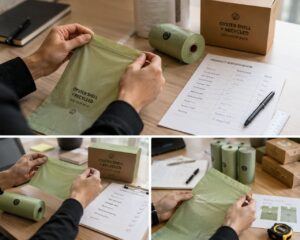
The same principle applies to environmental claims. Packaging should describe what the product actually contains and what available documentation can support. GRS-certified recycled raw material options are available from qualified upstream suppliers, with supporting supplier documentation provided where applicable. This should not be interpreted as GRS certification of the finished Xinrui bag.
A Useful Option for Building a More Distinctive SKU
One practical challenge in private label pet products is creating enough difference between SKUs.
Changing the box design, bag color, fragrance, or roll count can help, but competitors can make similar changes. Material choice creates a more fundamental point of difference.
A pet brand might keep one product as a 100% recycled option and use Oyster Shell + Recycled for another line. Distributors or retailers may use it to add a less conventional recycled-based SKU to an existing range.
The key is not to over-explain the oyster shell concept. End users need a simple and accurate explanation of what makes the product different, while buyers need a clear specification for product development and future reorders.
Packaging Should Make the Material Easy to Understand
Oyster Shell + Recycled is less familiar to many shoppers than terms such as “recycled” or “compostable,” so packaging has to explain the material clearly.
The front panel does not need a long technical description. A short material statement can communicate the main idea, while the side or back panel can provide more detail about the recycled plastic and oyster shell component.
Once the material claim is clear, packaging can communicate it alongside normal product information such as bag count, size, color and disposal guidance. The wording should stay within what the actual formulation and available documentation can support.
The goal is not to cover the package with environmental claims. It is to make the material easy to understand and give the buyer a clear reason to position the product differently.
For buyers still comparing recycled, Oyster Shell + Recycled, compostable, and Bio-PE, our guide on how to choose eco-friendly dog poop bags for wholesale and private label projects provides a broader overview of the four material directions.
Which Projects Are the Best Fit?
Oyster Shell + Recycled may be a good fit for:
- private label pet brands developing a differentiated recycled-based line
- distributors looking for a less commodity-like SKU
- retailers seeking an alternative to another standard compostable program
- importers building several material tiers within one product range
It may be less suitable when:
- certified compostability is a firm market requirement
- the project is driven almost entirely by the lowest possible unit price
- the buyer requires a specific material standard that the formulation does not meet
The goal is to identify projects where its material positioning, performance requirements, price level, and packaging options make commercial sense.
Final Thoughts
Oyster Shell + Recycled dog poop bags are not interesting simply because oyster shell powder is an unusual ingredient.
Their B2B value is that they give buyers another way to build a recycled-based product that is less easy to reduce to a basic price comparison.
For the right private label project, the material can create a clearer product position while keeping a familiar roll format and flexible packaging.
If you are evaluating an Oyster Shell + Recycled program, share your target market, bag specification, target price level, and packaging requirements with Xinrui.
We can review the material direction and product configuration together before you move into sampling.
Evaluating Oyster Shell + Recycled for a Project?
For product specifications and private label options, review our Oyster Shell + Recycled Dog Poop Bags material page, or share your target market and project requirements with us.