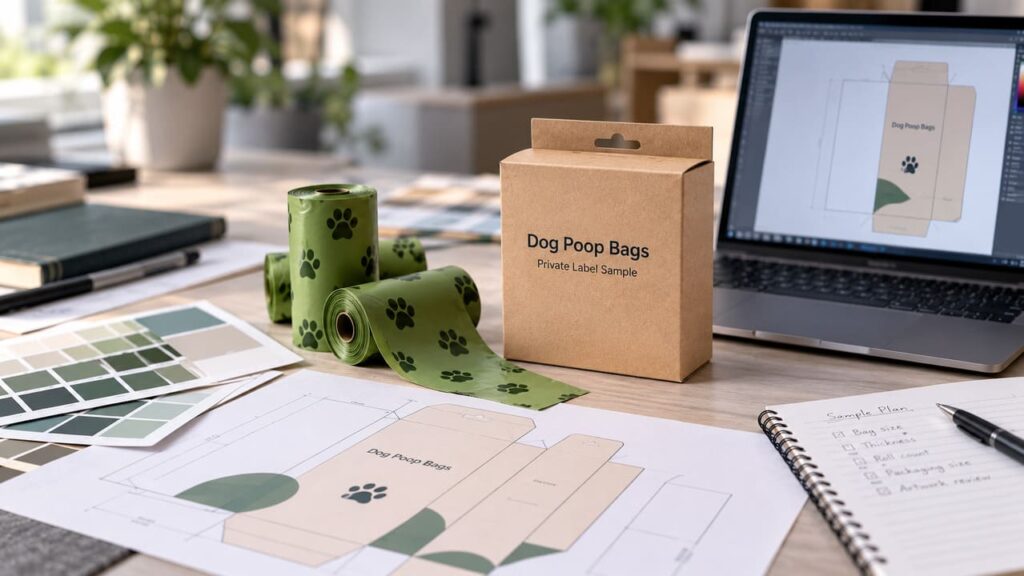
A private label dog poop bag project involves more than adding a logo to a box.
Before packaging artwork is finalized, buyers need to make several connected decisions — material, bag specifications, roll configuration, packaging, MOQ, samples, and production follow-up.
The order matters. A change in bag thickness or roll count, for example, can affect the finished roll size and the packaging built around it.
Here is a practical way to move a private label dog waste bag project from the initial idea to a production-ready specification.
Start With the Target Market and Product Positioning
Before choosing a material, consider where the product will be sold and how the brand wants to position it.
Different projects have different priorities. One may require certified compostability. Another may focus on reducing virgin plastic, creating a more distinctive material story, or supporting a lower-carbon positioning.
It also helps to define the intended product claims, expected performance, target price range, and sales channel early.
These decisions narrow down the options before time is spent on detailed specifications or packaging development.
Choose the Material That Fits the Project
There is no single sustainable material that fits every private label dog poop bag program.
100% Recycled can suit projects looking to reduce reliance on virgin plastic through post-consumer recycled material.
Oyster Shell + Recycled can suit brands looking for a more differentiated material story by combining recycled plastic with processed oyster shell powder from seafood by-products.
Compostable is relevant when certified compostability is an actual requirement for the target market or product positioning.
Bio-PE can support projects focused on renewable feedstock and lower-carbon positioning while remaining a polyethylene-based material.
Each option comes with different considerations around sourcing, claims, cost, and positioning. The right choice depends on what the product needs to achieve — not on which material sounds the most sustainable.
If you are still comparing material directions, our eco-friendly dog poop bag sourcing guide provides a broader overview of the available options.
Confirm Bag Specifications Before Designing the Packaging
Once the material direction is clear, define the physical product.
Typical specifications include:
- Bag size
- Thickness
- Bags per roll
- Core or coreless format
- Bag printing
These details are connected.
Increasing thickness or changing the number of bags per roll can change the finished roll diameter. That may require a different retail box size and can also affect how many units fit into an outer carton.
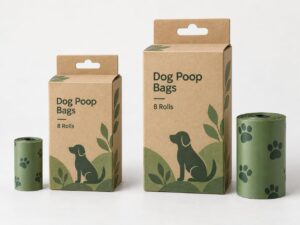
For private label dog poop bags, it is usually more efficient to settle the bag and roll configuration before spending too much time on packaging artwork.
A simple rule helps:
Confirm the product first. Build the packaging around it second.
Build the Packaging Around the Product
Once the product configuration is reasonably settled, the packaging can be developed around the actual roll.
Buyers should consider:
- Packaging format and dimensions
- Artwork and printing
- Required product information
- Material and sustainability claims
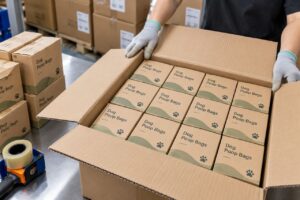
- Outer carton configuration
Custom packaging for private label dog poop bags needs to do more than look good. It also needs to fit the product properly, pack efficiently, and suit the intended retail or e-commerce channel.
Claims deserve particular attention.
Recycled, compostable, biodegradable, and bio-based describe different things. The wording on the finished pack should match the actual material and the supporting documentation available for the project.
Good packaging should communicate the product clearly without making claims the material cannot support.
Check MOQ Before Finalizing Artwork
MOQ is easier to manage early than after the packaging design is finished.
Order requirements can vary with material, printing, packaging format, and the level of customization involved.
For a first order or a new SKU, buyers should check whether the expected quantity makes sense for both the product and the packaging before committing to final artwork.
Sometimes a simpler packaging configuration is more practical for an initial launch than a more complex option that requires a larger quantity.
That does not mean the goal should always be the lowest possible MOQ.
The better question is whether the product configuration, packaging investment, and order quantity fit the commercial plan.
Use Samples to Confirm the Complete Product
Samples are useful for more than checking colors or packaging appearance.
Depending on the stage of development, they can help buyers review:
- Bag size and thickness
- Material feel
- Roll configuration
- Printing
- Packaging dimensions
- Artwork
- Fit between the roll and the package
The important point is to review the product as a complete combination.
A roll may meet the required specification but still need an adjustment to the box. A package may look good on screen but need changes once the physical product is placed inside.
Sample approval gives both buyer and supplier a shared reference before the order moves forward.
Keep the Approved Version Clear During Production Follow-Up
Once the main specifications and samples have been approved, the focus shifts from development to follow-up.
At this stage, everyone involved should be working from the same approved version of the product.
That normally includes:
- Final bag specifications
- Approved artwork
- Packaging details
- Carton requirements
- Order quantities
- Any project-specific instructions
If something changes after approval, the revision should be recorded clearly.
This matters because one small change can affect another part of the order. A change in roll configuration, for example, may also require a packaging adjustment.
For private label projects with several customized elements, keeping the approved version clear helps reduce avoidable mistakes and misunderstandings.
Private Label Dog Poop Bags: Sourcing Checklist
Before placing an order, buyers should be able to answer the following:
- Is the target market and product positioning clear?
- Has the material been selected?
- Are the bag size and thickness confirmed?
- Are the roll count and core format confirmed?
- Is bag printing approved?
- Are the retail packaging and artwork approved?
- Does the MOQ fit the launch plan?
- Have the relevant samples been approved?
- Are the outer carton and shipment requirements clear?
Not every private label program follows exactly the same path, but resolving these points before production gives both buyer and supplier a much clearer starting point.
Final Thoughts
A private label dog poop bag project works best when the product, packaging, and commercial requirements are developed together rather than as separate decisions.
Starting with the market, confirming the physical product before finalizing packaging, and keeping the approved details organized can make the sourcing process much easier to manage.
If you are developing a private label dog poop bag line, sharing your target market, material preference, basic bag specifications, estimated quantity, and packaging idea is a practical place to start.