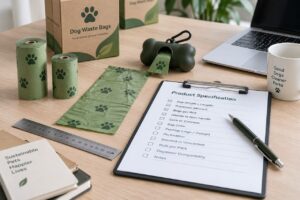
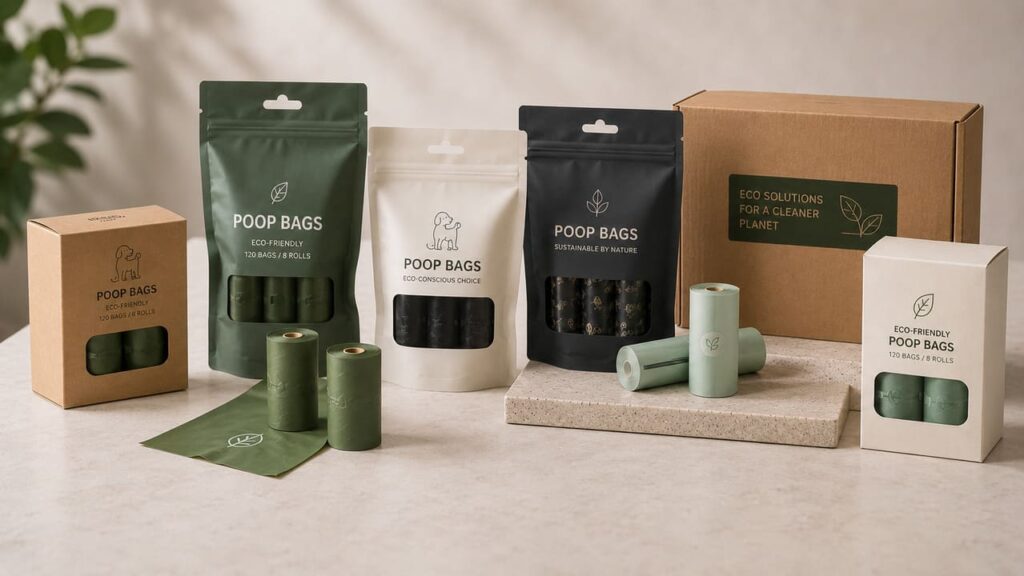
When developing a private label product line, choosing the right eco-friendly dog poop bags is one of the first decisions B2B buyers need to make.
For pet brands, distributors, and retailers, the question is not simply “Which bag is the most eco-friendly?”
The more important question is:
Which material fits your market, customers, pricing strategy, and brand positioning?
Today, buyers can choose from different eco-friendly dog poop bag materials, including recycled plastic, oyster shell blends, compostable materials, and Bio-PE.
Each option offers different advantages. Understanding these differences helps buyers create products that match their business goals and customer expectations.
Why Material Selection Matters for B2B Buyers
A dog poop bag is a simple product, but material selection affects many parts of a project:
- product positioning
- packaging communication
- customer perception
- pricing strategy
- sustainability claims
- long-term supply planning
For example, a distributor may prioritize stable supply and cost efficiency, while a premium pet brand may focus more on product differentiation and sustainability storytelling.
Before choosing a material, buyers should first consider:
- Where will the product be sold?
- Who is the target customer?
- Is the focus wholesale volume or premium branding?
- What type of sustainability message does the brand want to communicate?
The right material should support the overall product strategy.
Eco-Friendly Dog Poop Bag: Material Comparison
| Material | Suitable For | Key Consideration |
|---|---|---|
| 100% Recycled Plastic | Brands seeking a clear recycled-content position | Gives post-consumer plastic another life; upstream GRS material documentation may be available |
| Oyster Shell + Recycled | Private label brands seeking stronger material differentiation | Combines recycled plastic with an oyster shell by-product; no mined limestone-derived CaCO₃ filler |
| Compostable | Projects requiring certified compostability | Certification, claims, and higher material cost |
| Bio-PE | Brands focused on low-carbon positioning | Bio-based polyethylene; not compostable |
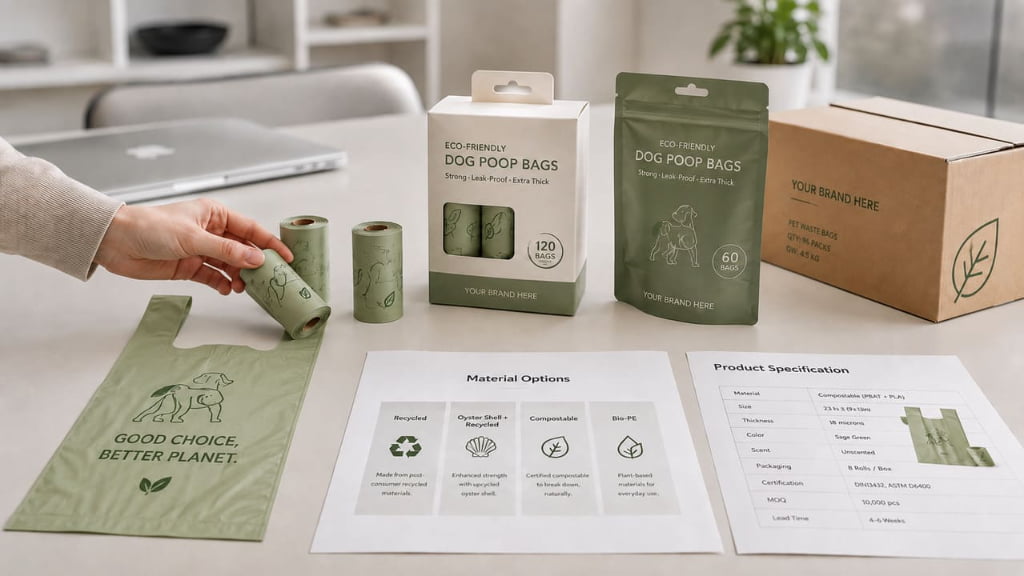
100% Recycled Plastic Dog Poop Bags
100% Recycled plastic dog poop bags offer a distinct material route for buyers who want post-consumer recycled plastic as the main material rather than moving directly into compostable formulations.
Where required, recycled raw material can be sourced from GRS-certified upstream suppliers, with supporting supplier documentation available where applicable.
This material option may suit buyers looking for:
- stable supply
- consistent product performance
- recycled content positioning
- competitive pricing
For distributors and large-volume buyers, recycled plastic can be an effective choice when the goal is to introduce more sustainable products while maintaining commercial practicality.
It is important to understand that recycled plastic and compostable materials represent different approaches.
Recycled plastic focuses on using recycled resources, while compostable materials focus on specific end-of-life conditions.
The better option depends on the target market and product positioning.
Oyster Shell + Recycled Dog Poop Bags
Oyster shell + recycled dog poop bags combine recycled plastic with processed oyster shell powder. This gives the product two reused material streams: previously used plastic is returned to productive use, while an aquaculture shell by-product becomes the mineral component of the formulation. No mined limestone-derived CaCO₃ filler is added to this formulation.
In a competitive pet market, many products offer similar basic functions. A unique material story can help private label brands create stronger differentiation.
This material direction may be suitable for:
- premium pet brands
- retail products
- online brands looking for a stronger product story
For these projects, material choice and packaging design usually work together.
A clear sustainability message can help customers better understand what makes a product different.
For a closer look at sourcing and private label considerations, read our guide to Oyster Shell + Recycled dog poop bags.
Compostable Dog Poop Bags
Compostable dog poop bags are commonly considered by brands targeting environmentally conscious markets.
They can support product positioning focused on:
- compostable material claims
- premium eco-product lines
- sustainability-focused customers
However, compostable products require careful planning.
Buyers should pay attention to:
- applicable certifications
- market requirements
- packaging wording
- customer understanding
One common mistake is treating all eco-friendly materials as the same.
Compostable, biodegradable, and bio-based materials describe different characteristics. Clear and accurate communication is important for building customer trust.
For a closer look at compostable vs biodegradable terminology, claims, and sourcing considerations, read our guide to compostable vs biodegradable dog poop bags.
Bio-PE Dog Poop Bags
Bio-PE dog poop bags are made from bio-based polyethylene and provide another approach to sustainable product development.
Bio-PE may be suitable for brands interested in:
- renewable material positioning
- reducing dependence on fossil-based resources
- According to technical information provided by our upstream Bio-PE material supplier, 1 ton of Bio-PE can reduce carbon dioxide emissions by approximately 3.22 tons. This makes Bio-PE particularly relevant for brands that prioritize low-carbon material positioning.
One important point:
Bio-PE is bio-based, but it is not compostable.
This difference should be reflected clearly in packaging, product descriptions, and marketing communication.
Using accurate claims helps customers understand the actual value of the material.
For a closer look at material sourcing, carbon positioning and buyer considerations, see our Bio-PE dog poop bags guide.
Choosing Materials Based on Your Project Goals
Different buyers may prioritize different factors.
For wholesale and distribution programs, consistency, supply stability, and cost control are often important considerations.
For private label brands, differentiation, packaging presentation, and sustainability storytelling may have greater importance.
For retail and e-commerce products, the material story should be easy for customers to understand and should match the overall brand image.
There is no single material that works for every project. The best choice depends on the market, product strategy, and customer expectations.
Packaging Matters Too
Material is only one part of a successful dog poop bag project.
Packaging also influences:
- product presentation
- customer understanding
- shipping efficiency
- retail suitability
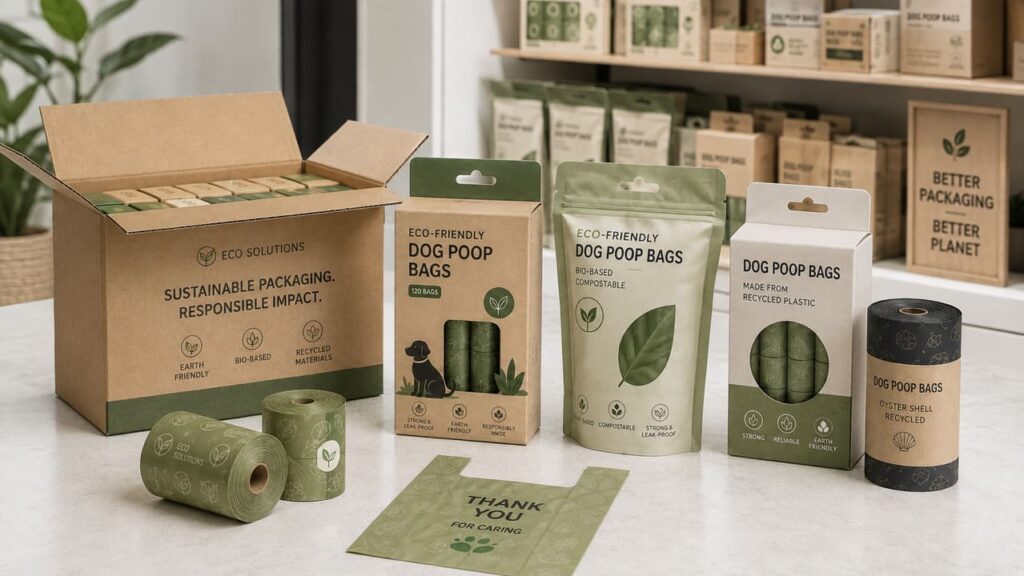
Common packaging options include:
- retail boxes
- header cards
- pouches
- bulk cartons
For private label projects, packaging should be considered together with material selection.
A well-planned package helps communicate the product story clearly and avoids confusion about sustainability claims.
Common Mistakes Buyers Should Avoid
Choosing Only Based on Price
The lowest unit price does not always create the best long-term value.
Material consistency, packaging requirements, and product positioning should also be considered.
Confusing Sustainability Terms
Recycled, compostable, biodegradable, and bio-based materials have different meanings.
Using accurate terminology helps brands communicate more effectively.
Selecting Materials Without Considering the Market
A material that works well in one market may not be suitable for another.
Buyer expectations, regulations, and sales channels should all be considered before finalizing a product direction.
Final Thoughts
Choosing eco-friendly dog poop bags for wholesale and private label projects requires balancing sustainability goals with practical business needs.
The right choice depends on:
- target market
- product positioning
- packaging strategy
- customer expectations
Whether you are considering recycled plastic, oyster shell + recycled materials, compostable options, or Bio-PE, understanding the differences can help you build a product that fits your market.
At Xinrui Pet Products, we help B2B buyers evaluate material options, packaging solutions, and product directions for eco-friendly pet waste bags.
Looking for the Right Material Option?
If you are developing a private label of eco-friendly dog poop bags project, share your target market, preferred material direction, and packaging requirements.
We can discuss suitable options based on your product goals.