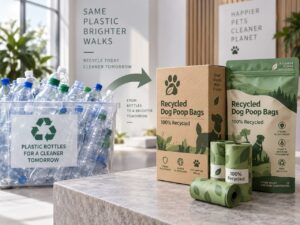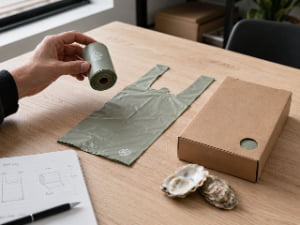
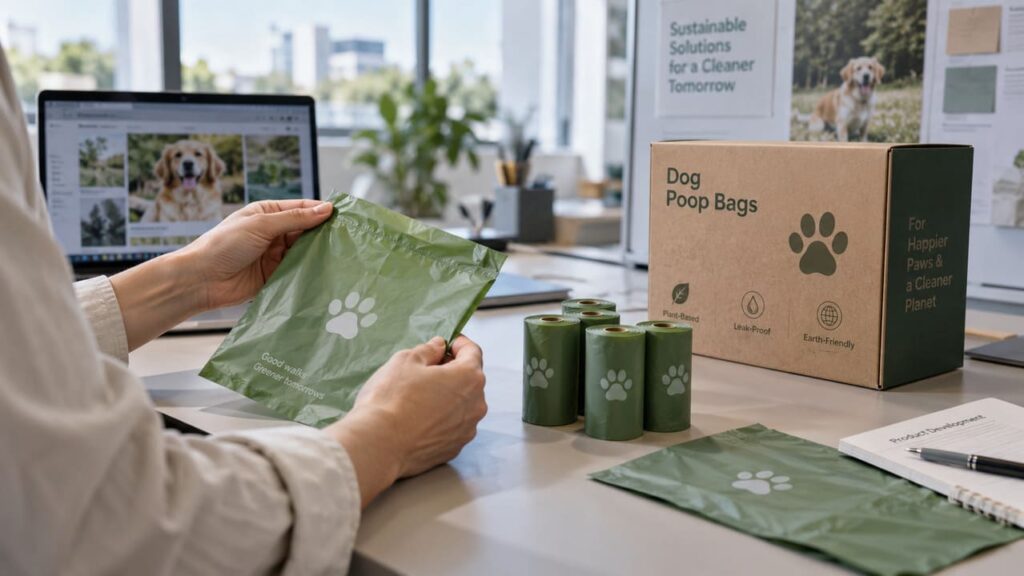
For pet brands looking beyond conventional polyethylene, Bio-PE dog poop bags offer another material route alongside recycled and compostable options.
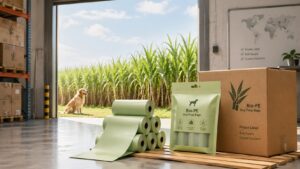
Bio-PE is polyethylene made from renewable plant-based feedstock, mainly sugarcane, instead of relying entirely on fossil-based raw materials. For private label buyers, its main value is lower-carbon positioning while keeping the product within a familiar PE material system.
If you are comparing different material directions, our guide to eco-friendly dog poop bags for wholesale and private label provides a broader overview.
What Are Bio-PE Dog Poop Bags?
Bio-PE dog poop bags use bio-based polyethylene instead of conventional PE made entirely from fossil-based feedstock.
“Bio-based” means that the material is derived from renewable biological resources. It describes the origin of the material, not how the product behaves after disposal.
Bio-PE therefore remains polyethylene and should not be confused with compostable material.
For a broader explanation of end-of-life terminology, see our Compostable vs Biodegradable Dog Poop Bags guide.
Why Do Private Label Buyers Consider Bio-PE?
Most buyers do not switch materials simply because an alternative sounds more sustainable. There needs to be a commercial reason behind the choice.
For Bio-PE, that reason is usually linked to renewable feedstock and lower-carbon positioning.
A pet brand may want to reduce its reliance on conventional fossil-based raw materials without moving to a compostable material system. Bio-PE gives that buyer another option.
Because it is still polyethylene, many familiar product requirements remain relevant. Bag dimensions, thickness, sealing, roll format, printing and retail packaging can all be developed within a familiar PE-based product structure.
This does not mean every Bio-PE formulation will perform exactly like every conventional PE formulation. Buyers should still approve the finished bag through normal sampling and testing.
For buyers, the practical value is that the material direction can change without completely changing the product concept.
Bio-PE vs Conventional PE
The main difference between Bio-PE and conventional PE is the feedstock.
Conventional polyethylene is generally produced from fossil-based raw materials. Bio-PE uses renewable biological resources to produce polyethylene.
At finished-product level, the two can look and feel very similar. The difference is therefore not always visible from the bag itself.
For a private label brand, Bio-PE can make sense when the product needs a renewable-material and lower-carbon story while retaining the familiar characteristics of a PE-based bag.
Cost still matters.
Buyers should not select Bio-PE simply because the word “bio” looks attractive on packaging. The material has to fit the target market, retail price and overall product positioning.
Bio-PE Is Not the Same as Compostable
Bio-PE and compostable materials can both form part of a sustainability-focused product range, but they solve different purchasing needs.
A compostable project is usually driven by end-of-life requirements, certification and the type of claims a brand needs to make in a particular market.
Bio-PE follows a different route. Its value comes from the use of renewable feedstock and its lower-carbon positioning, while the material itself remains polyethylene.
If certified compostability is central to the project, buyers should evaluate our compostable dog poop bags separately.
For buyers, keeping these two material routes clearly separated also helps avoid confusing product and packaging claims.
Carbon Reduction and Bio-PE Positioning
Lower-carbon positioning is one of the main reasons Bio-PE attracts interest from sustainability-focused brands.
Material data for this Bio-PE indicates that 1 ton of Bio-PE can reduce carbon dioxide emissions by approximately 3.22 tons.
For pet brands, this gives Bio-PE a clear role when the goal is to reduce reliance on conventional fossil-based feedstock and strengthen the lower-carbon positioning of a product range.
The figure refers to the Bio-PE material itself rather than the total carbon footprint of the complete finished dog poop bag. That distinction is worth keeping clear when the information is used in product communication.
More product-level information is available on our Bio-PE dog poop bags page.
What Should Buyers Check Before Sourcing Bio-PE Dog Poop Bags?
A Bio-PE project should still be evaluated like any other private label product. The material story matters, but the finished bag has to work commercially and technically.
Useful questions include:
- What bag size, thickness and roll format are required?
- What printing and packaging format does the project require?
- What material claims will appear on the retail packaging?
- How does Bio-PE affect the target cost?
- Does the material story fit the intended market and brand position?
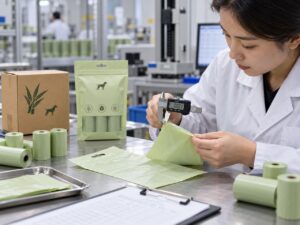
These questions are more useful than simply asking whether Bio-PE is “more sustainable” than another option.
A material can make technical sense and still be the wrong commercial choice if the cost, positioning or target market does not support it.
When Does Bio-PE Make Sense?
Bio-PE makes the most sense when a buyer has a clear reason for choosing a bio-based polyethylene route.
It can suit brands that want renewable feedstock and lower-carbon positioning while keeping a PE-based bag structure.
Other projects may have different priorities.
If recycled content is the main requirement, 100% Recycled dog poop bags may provide a more direct material story.
If the buyer wants a differentiated recycled-based option combining post-consumer recycled plastic with an aquaculture shell by-product, our Oyster Shell + Recycled dog poop bags guide explains that material route in more detail.
If certified compostability is the core requirement, compostable material should remain the starting point.
The right choice depends on what the buyer wants the product to achieve.
Choosing Bio-PE for the Right Reason
Bio-PE gives pet brands another way to approach sustainable material selection.
Its strongest role is not as a substitute for recycled or compostable bags. It is a bio-based polyethylene option for projects where renewable feedstock and lower-carbon positioning matter.
A good purchasing decision still comes back to the basics: target market, product specification, intended claims and cost.
When those points are clear, it becomes easier to decide whether Bio-PE belongs in the product line—or whether recycled, Oyster Shell + Recycled or compostable material is a better fit.
Not Sure Whether Bio-PE Fits Your Project?
Share your target market, required product claims, bag specification, packaging format and target price range. We can help you compare Bio-PE with other material options before moving into sampling.